
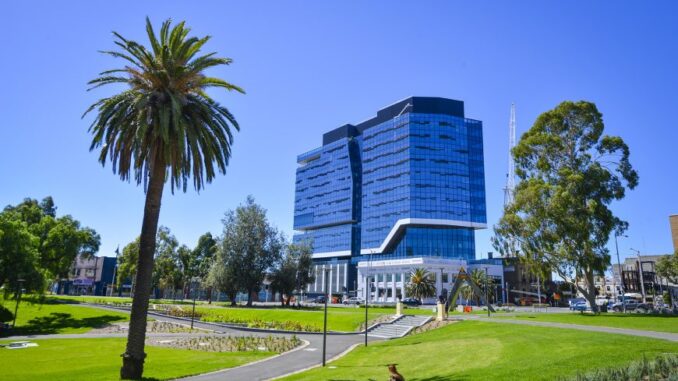
Civil construction sites have become commonplace in Geelong, a fast-growing city about an hour south-west of Melbourne, Australia. From central Geelong, where mega civil construction projects are ongoing, to the outskirts of the city, where massive housing projects are underway, the activity is hard to miss. One example is the Silverbrook estate, which was initially earmarked for the athletes’ village.
The site, which was supposed to house athletes for the 2026 Commonwealth Games before Victoria cancelled the event, is now being cleared and prepared by civil contractors for the construction of hundreds of new homes, and work on this scale has helped drive steady demand for excavator rentals in Geelong. Almost everything in and around Geelong is receiving attention through Victoria’s Big Build, the state government’s major infrastructure program, and within this context even Geelong’s maritime infrastructure is receiving a facelift. The council recently awarded a contract to a civil construction firm to redevelop the Limeburners Boat Ramp.
The redevelopment will generally involve expanding the existing car park, reinforcing the breakwater and the more complex task of reconstructing vital marine access points and piers.
Although primary projects such as the Nyaal Banyul Geelong Convention and Event Centre are fundamentally at the core of Geelong’s transformation, these primary projects could never achieve their objectives without the ‘satellite’ projects that support them from several perspectives.
These satellite projects are backed by the council’s A$171.6 million capital works program, which focuses on Geelong’s long-term asset renewal and community liveability. When coupled with projects overseen by Victoria’s Department of Transport and Planning, such as the four new Precinct Structure Plans (long-term plans that guide how new growth areas are developed), they provide the foundation generally required for economic growth to take root.
These initiatives also more often than not create a relentless pipeline of construction work that is likely to keep the entire civil sector busy for a decade.
On the downside, the dozens of projects that dot Geelong are not without issues for residents, although for the most part these are temporary. The difficulties faced by the average resident include traffic detours and added congestion at some choke points. However, some of the new transport networks that have been installed have already eased congestion in other parts of Geelong, and this will be the long-term payoff that establishes Geelong as a highly connected economic hub.
Apart from traffic, the projects have also driven up demand for skilled workers and materials across the construction sector, which in turn has caused wages and prices to rise significantly. This has been straining the profit margins of civil construction firms, which are generally tied not just to fixed schedules but also to fixed budgets.
Most civil firms are bracing for further increases in material costs and wages as more projects roll out of the pipeline. Rising fuel prices linked to the US-Iran war are also adding pressure to the construction industry as a whole, and as things currently stand, market stability will remain out of reach.